
Palworld breeding guide
Palworld Breeding Passive Skills: How to Plan Inheritance
Palworld breeding passive skills are easier to manage when you separate two jobs: finding a legal parent route and building the trait set you want. A child can inherit useful passives, but the result is still a planning problem rather than a guaranteed recipe.
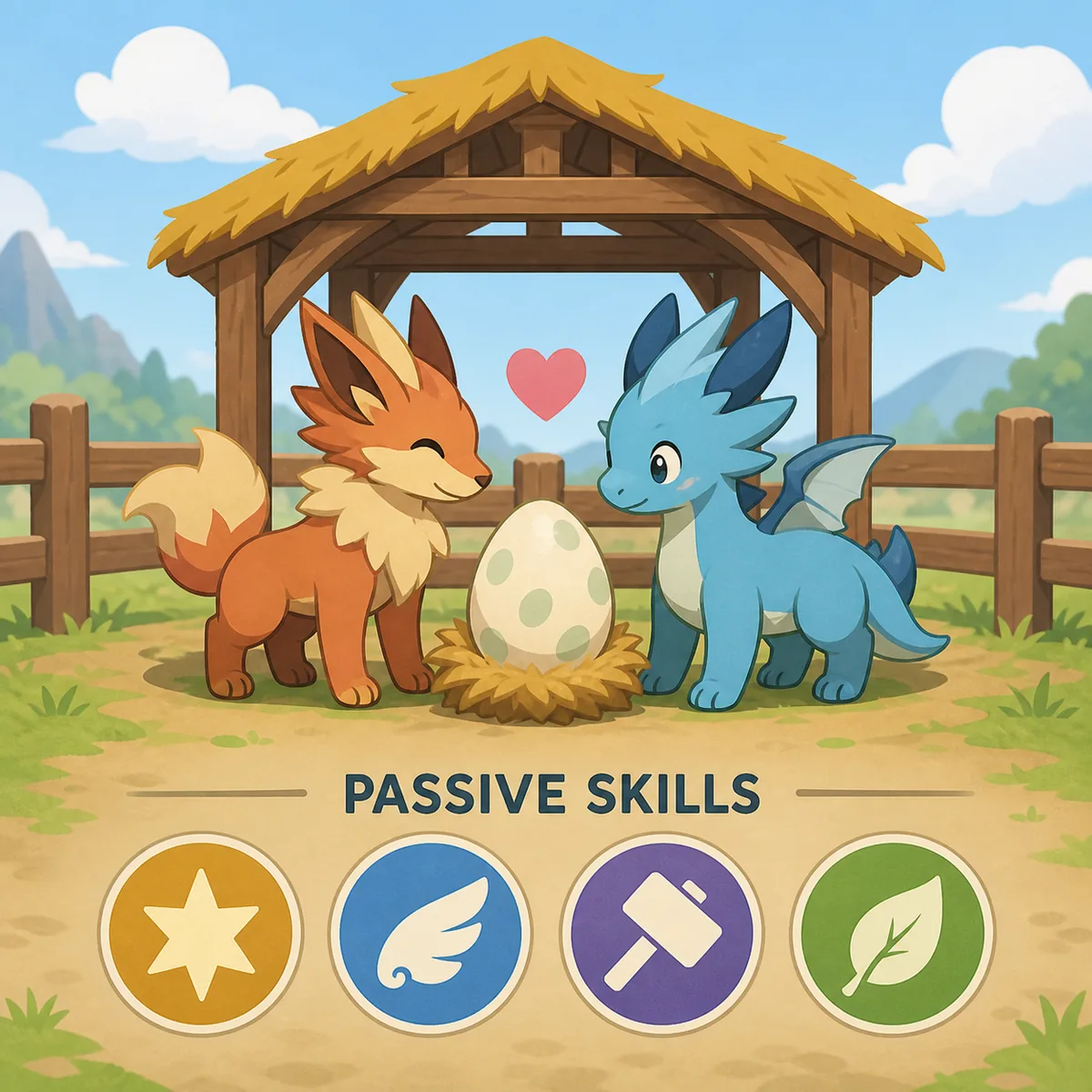
Quick answer: how do passive skills work in Palworld breeding?
Start with the target Pal and the passive skills that actually serve your goal. Keep at least one parent carrying a useful trait, then breed in controlled steps and inspect each child before using it as the next parent. This makes it easier to tell whether a problem came from the species route, the passive pool, or a simple storage mistake.
The important limitation is randomness. A parent that carries a passive does not turn every egg into a guaranteed copy, and a clean-looking pair is not proof of a fixed probability. Treat each egg as a checkable result, keep good carriers separate, and use the calculator for the parent route rather than for an invented odds promise.
- Define the goal: Choose the final species and the small set of combat, work, movement, or collection traits you care about.
- Protect carriers: Keep parents with useful passives away from ordinary work assignments so they are not sold, consumed, or mixed into the wrong line.
- Change one variable: Use one controlled breeding step at a time when you are trying to understand which parent line produced a result.
- Verify in game: The child shown by the game is the result. This guide gives a planning method, not an official inheritance guarantee.
1. Build a passive-skill plan before spending Cake
A common mistake is to start with a long list of desired passives and no decision about the final Pal. That makes every egg look useful and makes it difficult to know which parent should be kept. Write the target species first, then rank the traits: essential, helpful, and optional.
Next, inspect the Pals already available to you. The fastest species route is not always the cleanest passive route. A parent may be excellent for reaching a species but poor for preserving the trait line you are trying to build. Separating these decisions keeps the breeding plan readable and reduces wasted Cake.
| Planning question | Practical check | Why it matters |
|---|---|---|
| What is the final target? | Write the species and role before choosing parents. | A combat Pal and a base-work Pal may need different trait priorities. |
| Which passive is essential? | Mark one to three must-have traits; leave the rest optional. | A smaller target is easier to inspect and repeat. |
| Which parent is the carrier? | Record the parent, its sex, species, and useful traits. | A carrier can be lost if it is treated like an ordinary worker. |
| Where will intermediates go? | Reserve boxes or labels for carriers, eggs, and rejects. | Clear storage prevents an accidental reset of the line. |
| What is still uncertain? | Separate source facts from player observations. | The current dataset does not provide an official passive percentage. |
Use the current game display as the final authority. This site is an independent fan resource, and its breeding dataset is a versioned parent-child snapshot rather than an official passive-inheritance formula.
2. Step-by-step passive inheritance workflow
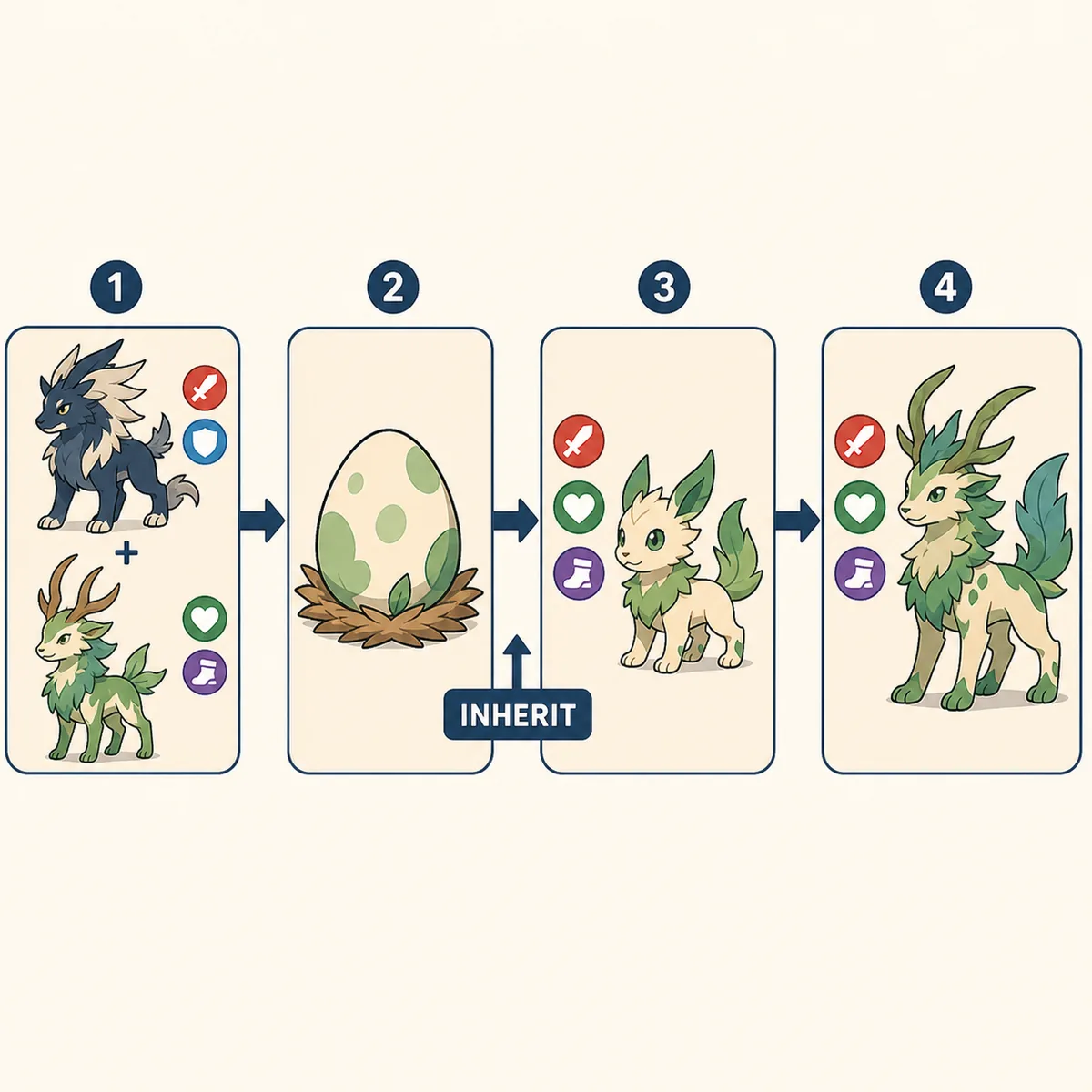
Think of passive breeding as a small experiment with a saved state. Before each round, write down the parents and the traits you expect to preserve. After the egg hatches, keep the useful result and record what changed. This is more reliable than trying to remember a long chain after several eggs.
When a target species also requires intermediate Pals, finish the species route and the passive route in parallel only when you can keep the carrier parents clearly separated. Otherwise, make the species first and add the trait line afterward.
-
1. Choose the final species and role
Decide whether the Pal is for combat, base work, transport, breeding, or collection. That choice determines which passives deserve space in the plan.
-
2. List the available carriers
Write down every parent that already has a useful passive. Include the exact species and keep the list separate from ordinary working Pals.
-
3. Separate route from traits
Use the calculator to find a reachable parent chain. Do not assume the shortest species chain is automatically the best trait chain.
-
4. Breed one controlled step
Add Cake, produce an egg, and inspect the child. Keep a good carrier even when the child is not yet the final species.
-
5. Lock the useful result
Label the new parent, move it to a protected group, and decide whether the next round should improve the species, the passive set, or both.
3. Route planning and trait planning are different jobs
A breeding calculator answers a route question: which parent combinations can reach a target from the Pals you enter? Passive planning answers a different question: which child should be kept as a carrier for the next round? Mixing the two questions is why a valid route can still feel like a failed passive plan.
Use a simple two-column note for long projects. Put species and parent combinations on the route side. Put desired traits, observed children, and protected carriers on the traits side. If the final result is not appearing, you can then identify whether the missing piece is a parent route or an inheritance attempt.
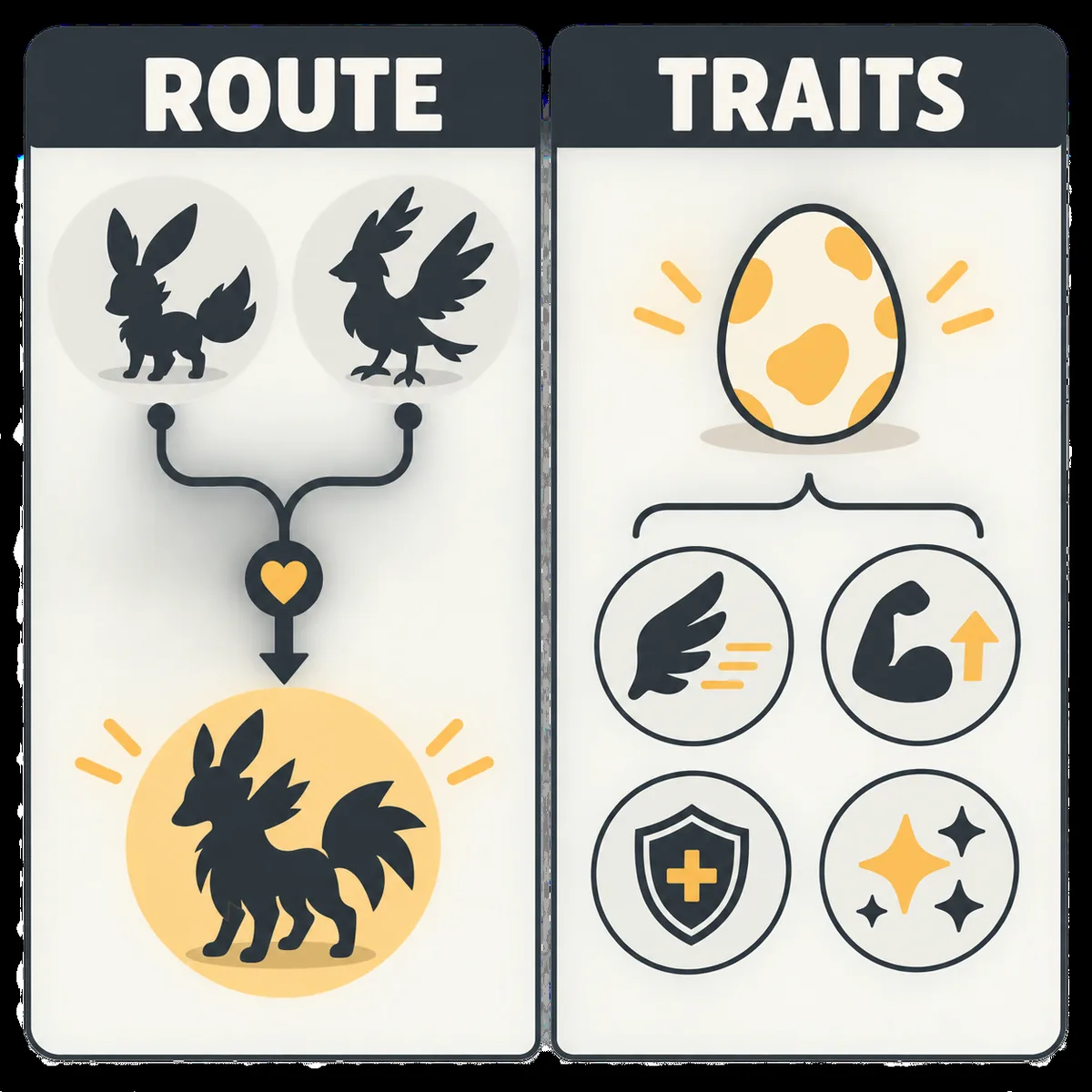
- Route: The calculator searches the local parent-child dataset and returns a practical chain within your generation limit.
- Traits: The game result determines which passive skills are present on the child; the guide does not convert that result into a guaranteed percentage.
- Storage: Keep useful carriers, final candidates, and ordinary workers in visibly different groups.
- Review: After an update or data correction, recheck old chains before spending Cake on a large batch.
4. Why a passive breeding plan fails
Most failed plans are not caused by one mysterious rule. They come from changing too many parents at once, losing track of a carrier, or treating a planning estimate as a promise. A short log with parent names, traits, eggs, and dates is often enough to find the break.
If the plan still does not make sense, reduce it to one target species and one essential passive. Once that smaller loop is understandable, add the next trait or intermediate species. This also makes reports easier if a future game update changes breeding behavior.
- The trait is only on a lost parent: Restore the carrier line or choose a different available parent before expanding the chain.
- Too many passives are targeted at once: Keep one or two essentials first, then improve the result in another controlled round.
- A worker was used as a carrier: Separate breeding parents from base assignments and label rare trait holders.
- A route was mistaken for an odds calculator: The calculator can explain parent reachability; it cannot guarantee the next egg's passive result.
- The data is stale: Check the current game display and the source date before relying on an older chain after a patch.
5. Use the calculator after the trait plan is clear
When you know the target Pal and the carriers you can actually use, open the Palworld breeding calculator and enter your owned Pals. Set a realistic generation limit, inspect the intermediate parents, and treat the result as a route proposal. The passive plan remains a separate record that you verify egg by egg.
If the facility itself is the problem, read the breeding farm guide first: assigning parents, keeping Cake available, and fixing blocked paths are different from solving a parent or passive route.
Open the Palworld breeding calculator Read the data method Read the breeding farm guide Best Breeding Combos
Palworld breeding passive skills FAQ
Can passive skills be inherited through Palworld breeding?
A child can receive passive skills from its breeding line, but the result is not a guaranteed copy for every egg. Keep useful parents and inspect each child instead of treating one parent as a fixed recipe.
How do you transfer passive skills by breeding in Palworld?
Keep a parent that carries the desired skill, breed it in a controlled pair, inspect the child, and protect any useful carrier for the next round. Repeat only after recording what the last egg produced.
Are passive skills random when breeding in Palworld?
The outcome should be treated as variable for planning purposes. This site does not publish an official percentage, so do not promise a result based only on the parents' visible traits.
Should both parents have the same passive skill?
Matching parents can make a goal easier to reason about, but it is not a guarantee that every child will show that passive. Keep the plan small and verify the in-game result.
Does the Palworld breeding calculator calculate passive-skill odds?
No. The calculator is designed to find parent routes from your owned Pals and to frame passive planning as a risk. It does not invent an official inheritance probability.
What are the best breeding passive skills in Palworld?
The best choice depends on the Pal's job. Combat, work, movement, and breeding projects can value different traits, so choose the role first instead of copying a universal list.
Summary: plan the line, then verify every egg
A good Palworld breeding passive skills plan has three visible parts: a target species, protected carrier parents, and a short record of each breeding result. The calculator helps with the species route; it does not replace the trait log or guarantee a passive outcome.
Start with one essential passive, keep intermediate parents organized, and expand only after the smaller loop works. When the game or source data changes, recheck the assumptions before committing a large Cake budget.
Sources and scope
This is an independent fan guide. The passive-skill terminology is cross-checked against the community-maintained Palworld Wiki, while the calculator's parent-child routes come from a public data snapshot. Neither source is presented as an official Pocketpair inheritance formula.
Because the current calculator dataset does not contain a verified passive percentage table, this page deliberately explains a repeatable planning method instead of publishing an exact odds claim. Verify the current in-game result after patches.