

The short answer: Shadowbeak breeds with Shadowbeak
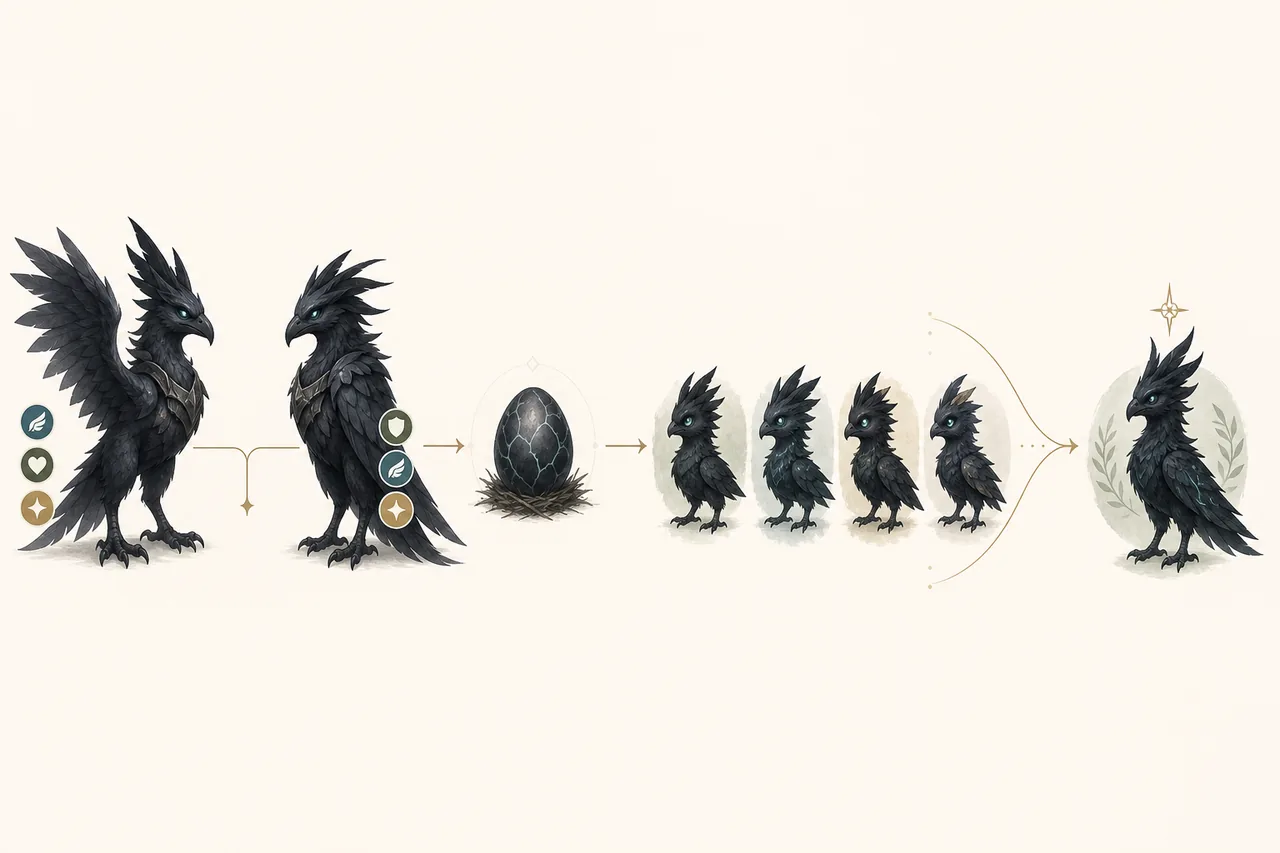
The fastest answer to the Shadowbeak breeding question is not a long parent list. In the checked-in PalCalc v26 browser data, the target entry is Shadowbeak, Paldeck #189, with a breeding power value of 550. Searching that target returns one direct species result: Shadowbeak plus Shadowbeak produces Shadowbeak. No other pair is currently printed as a direct route in this data set.
That result changes how you should plan the project. A generic Palworld breeding chart may suggest that any high-level or visually similar Pals can reach a rare target, but the exact child table is what the calculator can verify. For Shadowbeak, the immediate bottleneck is owning or obtaining two Shadowbeak parents, including the correct species name and gender setup. The route is not solved by choosing a nearby breeding-power value or by copying an older screenshot.
The species result and the passive result are separate checks. The pair determines the child species for this data version; it does not guarantee that the egg inherits the four traits you want. Keep one clean parent as a backup, test a small batch, and record the data version beside the pair. This makes a later patch check reproducible instead of leaving you to guess whether a failed egg came from the route or from inheritance.
| Check | Current v26 answer | Why it matters |
|---|---|---|
| Target | Shadowbeak, Paldeck #189 | Avoid mixing the name with another entry |
| Direct parent result | Shadowbeak + Shadowbeak | The current table returns one exact row |
| Passive inheritance | Still probabilistic | A correct species does not guarantee a perfect hatch |
| Version boundary | PalCalc v26, reviewed July 27, 2026 | Recheck after a data or game update |
Shadowbeak breeding combos: verify the only direct pair
The direct Shadowbeak breeding combo is deliberately easy to state and easy to misread. The current table contains one row with Shadowbeak on both sides and Shadowbeak as the child. The two parents are still two individual Pals in the game, so you need a male and a female for the breeding farm. The calculator row answers the species question; it does not replace the farm's gender, cake or incubation requirements.
Use the table below as a versioned checkpoint, not as a promise that every future patch will preserve the row. The live search is more useful than a static list because it runs from the same browser data used by the site's combo pages. If the result ever changes, write down the exact data version and the new pair before updating a larger cake queue.
You can also verify the source context in the site's PalCalc data notice and the PalCalc source project. That source is a data reference for this calculator, not a claim that the page is an official Pocketpair guide. Treat the page as a practical, version-labeled lookup and confirm unexpected in-game results before scaling the route.

| Parent 1 | Parent 2 | Child | Data note |
|---|---|---|---|
| Shadowbeak | Shadowbeak | Shadowbeak | Only direct v26 row |
How to check Shadowbeak breeding in the calculator
Start with the prefilled search near the top of this page. Run it once and read the full parent row rather than relying on the empty-state text. The useful evidence is the target name, both parent names and the displayed data version. If you opened the page from a translated route, keep the language version of the page but use the exact Pal name shown by the database so that the query resolves to the intended entry.
If the result does not look like your game, diagnose the mismatch in a fixed order. Check that you selected Shadowbeak rather than a similarly named or variant record, check that the installed game and the site data are being compared at the same update boundary, and then test one egg. Do not replace the pair with a guess based on rarity or combat power. A mismatch report should include both parents, the child you observed and the version label.
The site also has an all-combos page for broader comparisons and a breeding tree for cases where the direct parents are not in your box. Those tools answer different questions. The Shadowbeak page is the species-specific checkpoint; the tree is where you plan missing starting Pals, and the general table is where you explore a different target. Keeping those jobs separate prevents a generic route page from becoming a second copy of this exact answer.
- 1Search the exact target
Leave Shadowbeak selected and run the current combo search. Confirm the full name and Paldeck context.
- 2Record the direct row
Write down Shadowbeak plus Shadowbeak, the child result and the displayed data version.
- 3Check the farm pair
Use one male and one female parent, then confirm that both remain assigned before starting the queue.
- 4Hatch a verification egg
Confirm one result before scaling cake production, incubators or a passive-refinement batch.
Prepare the farm before you use the pair
A correct Shadowbeak breeding combo still fails operationally when the farm has no cake, one parent is missing, or the egg has nowhere to go. Prepare the resource loop before you move both parents into the pen. Keep the parents available for a small test, reserve cake for the verification run and check the incubator capacity at the same time. This is more efficient than filling every station and discovering that the direct result was misunderstood.
The farm checklist is intentionally simple: two compatible parents, cake in the farm chest, an active breeding pen, and an incubator that can accept the egg. If you are refining passives, also keep a spare parent outside the pen. The first clean hatch may be useful as a replacement, but it should not immediately become your only copy of the line. A backup gives you room to compare children without destroying the previous state.
For a longer project, separate species verification from production speed. The breeding farm guide covers cake and incubation capacity, while the breeding speed guide helps locate a slow queue. Neither guide changes which parents produce Shadowbeak. First prove the row with one egg; only then decide whether extra cake, incubators or workers will actually remove your current bottleneck.
- Two individual Shadowbeak parents with the required male and female setup.
- Cake available in the breeding farm chest before the test begins.
- An incubator slot reserved for the verification egg.
- A backup parent or a written note before you start replacing the line.
- The v26 data label saved with the pair and observed child.
Species result and passive inheritance are different checks
The phrase Shadowbeak breeding can describe two jobs: getting the species and improving the child's passive pool. The current row answers the first job. The second job takes repeated eggs because the useful traits can come from either parent and unwanted traits can also enter the inheritance pool. A perfect-looking parent pair is therefore a starting condition, not a guarantee of a perfect hatch.
Choose the final role before you select which Shadowbeak parents to preserve. A combat project may value a different group of traits from a future breeding carrier. Do not combine every positive-looking skill into both parents without a plan; a noisy pool makes it harder to identify a child worth keeping. The site's passive-skills guide explains the broader inheritance strategy, while this page keeps the target species and the one direct row in view.
Use a small, labeled batch to learn whether the line is improving. Record the two parents, the child's passives and the reason you kept or rejected it. Replace one parent at a time and keep the other stable. That simple control makes it possible to tell whether a change improved inheritance or merely produced a different random result. It also protects the exact pair from disappearing while you experiment.
| Project goal | Parent decision | What to verify |
|---|---|---|
| Get the species | Keep the exact Shadowbeak pair | One egg returns Shadowbeak |
| Combat line | Reduce unrelated traits around the chosen role | Several hatches improve the intended pool |
| Breeding carrier | Preserve a clean, reusable parent | The parent remains useful for later routes |
| Update check | Keep a pre-update backup and notes | The pair still matches the new data |
Old charts, variants and version limits
Search results often mix current tables with old videos, spreadsheets and forum answers. A page can still rank for Shadowbeak breeding while its parent row belongs to an earlier build. That is why this guide puts the data version beside the exact answer. Use an old chart as a lead if it helps you identify a parent, but run the pair through the current search before you spend cake.
Names and variants deserve the same caution. Shadowbeak is the target record used by this page; a different name, suffix or variant is a different database entry. If the datalist shows a distinct entry, select it deliberately. Do not assume that a matching Paldeck number, similar icon or similar breeding power means two records are interchangeable.
The data snapshot used here was reviewed on July 27, 2026 and the page was published on August 3, 2026. Those dates describe the checked-in source, not a promise about every future Palworld update. After a patch, rerun the target search, hatch one test egg and compare the observed result with the new row. If the route changes, update the page's source data before trusting a new production plan.
This page documents the checked-in PalCalc v26 table. It is a version-labeled reference, not an official Pocketpair rules announcement. Verify an unexpected result in the current game build before scaling the route.
A repeatable Shadowbeak breeding checklist
A good Shadowbeak breeding plan ends with a record another player, or your future self, can reproduce. Save the exact target name, the two parent names, the data version, the egg result and the passive rule you used. If the project is only about obtaining the species, stop after the verification hatch. If it is a combat or carrier project, continue with labeled batches and keep a backup before each replacement.
The one-row answer is useful because it removes a common source of wasted work: searching for a long list of alternative parents that the current table does not support. The hard part is availability and refinement, not guessing a hidden shortcut. Use the direct search for the species, the farm guide for resources, the tree for missing Pals and the passive guide for inheritance decisions. Together those pages cover separate steps without changing the Shadowbeak keyword boundary.
- 1Lock the target
Select the exact Shadowbeak entry and note Paldeck #189 and the v26 label.
- 2Confirm the only row
Verify Shadowbeak plus Shadowbeak returns Shadowbeak before preparing a large queue.
- 3Run one controlled egg
Use the required farm setup and record the species result and parent names.
- 4Refine with backups
Change one parent at a time when selecting passives, and preserve a usable copy of the line.