
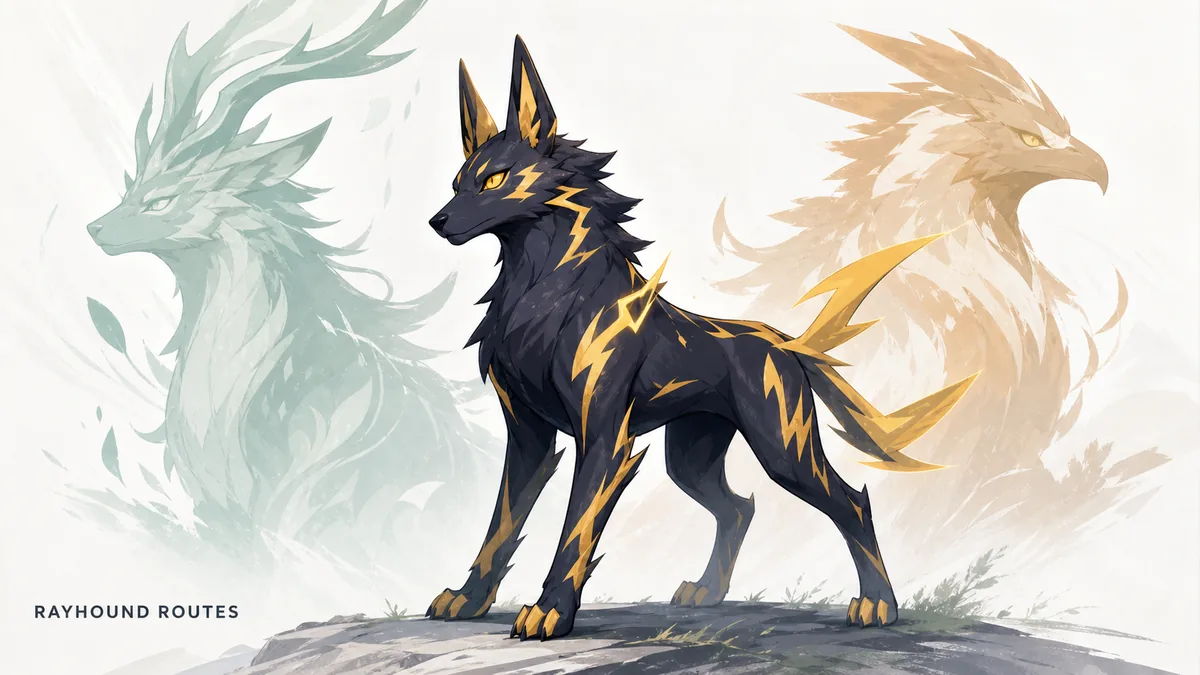
Current Rayhound breeding combos: the fast answer
The current v26 table returns 357 exact parent pairs that produce Rayhound. That is too many to memorize and too many to print as an undifferentiated wall of names, so the live search above is the source of truth. The twelve examples below are practical starting points selected from the same browser data; they are not the only valid routes.
A pair only solves the child-species question. It does not guarantee gender, passive skills or strong IVs. Before choosing a combo, inspect which parents you already own, whether their variants match the names exactly and which unwanted passives they may add to the inheritance pool. The easiest species pair can become the most expensive trait project when both parents are noisy.
For a fresh line, pick one accessible pair and hatch a small verification batch. Confirm that the child is Rayhound in your installed build, then decide whether the parents are clean enough to scale. This separates a current-data check from the longer work of producing a combat, movement or breeding-carrier Rayhound.
| Parent 1 | Parent 2 | Why it is useful |
|---|---|---|
| Fuack Ignis | Kingpaca Cryst | Early-number variant pair for a controlled check |
| Turtacle Terra | Pengullet Lux | Terra and Lux suffixes make a clear variant test |
| Turtacle Terra | Foxparks Cryst | Useful when Foxparks Cryst is already in the box |
| Turtacle Terra | Hangyu Cryst | Another Turtacle Terra route with a distinct Cryst parent |
| Azurobe Cryst | Croajiro | Compact pair when Croajiro is readily available |
| Azurobe Cryst | Caprity | Alternative Azurobe Cryst route using Caprity |
| Killamari Primo | Loupmoon Cryst | Primo and Cryst example for exact-name verification |
| Gloopie | Loupmoon Cryst | Works when a clean Gloopie can carry the desired traits |
| Gobfin | Loupmoon Cryst | Offers a Gobfin route with the same Cryst-side target power |
| Turtacle | Vanwyrm Cryst | Clear Cryst pairing for a repeatable verification batch |
| Univolt | Felbat | Familiar mid-Paldeck parents for passive-pool comparison |
| Rayhound | Rayhound | Self-breeding route once both genders are available |
Ignis, Cryst, Terra, Lux, Noct and Primo suffixes identify separate records. Dropping a suffix can change the child.
How to use the Rayhound breeding search
Run the prefilled tool and scan the complete list for parents already present in your Palbox. The search calculates against the final v26 child table instead of estimating from breeding power alone. That matters because variants and special data can make a remembered formula or an old chart unreliable after a major game update.
Shortlist two or three pairs rather than choosing the first row. A useful pair has the right genders, repeatable access and a passive pool aligned with the final job. If one parent carries several unrelated passives, another species combination with cleaner parents will usually require fewer eggs even if obtaining that pair takes one extra step.
Use the breeding tree when neither parent is available. Add the Pals you actually own, target Rayhound and inspect the intermediate generations. Use the all-combos search when you want to compare every pair without the Rayhound-specific planning notes on this page.
- 1Load all current pairs
Run the prefilled search and keep the visible v26 data label with your notes.
- 2Match exact variants
Check every suffix and gender against the Pals in your current save.
- 3Audit the passive pool
Prefer parents that carry only traits you want to keep or can tolerate.
- 4Hatch a verification batch
Confirm the species result before scaling cake, farms and incubators.
Choose a parent pair you can repeat
The best Rayhound breeding combo is not a universal row. It is the row your save can repeat without losing a critical parent, running out of cake or injecting avoidable traits. Keep at least one backup of valuable intermediates and avoid condensing the only male or female needed for the route until the line is stable.
Compare acquisition cost with egg cost. A parent pair already in the box may look free, but four unrelated passives can turn it into dozens of low-value hatches. A cleaner pair may take longer to prepare and still finish sooner because every egg has a better chance to carry the intended trait set.
Once you have both Rayhound genders, Rayhound plus Rayhound is a current v26 self-breeding route. Self-breeding is useful for refining a line because you can keep replacing one parent with a cleaner child. It is not automatically superior: two noisy Rayhounds keep the same inheritance problem alive.

Build a clean Rayhound passive-inheritance route
Define Rayhound’s role before choosing traits. A mounted movement build, a combat build and a clean carrier for another breeding project need different passives. Trying to preserve every seemingly useful trait creates a mixed pool and makes it harder to identify which hatch should replace a parent.
Start with parents carrying zero to two desired passives and as few unrelated traits as possible. Hatch several eggs, keep the cleanest male and female, then replace the noisier parent. Repeat that improvement deliberately. The process is slower than keeping every gold trait, but it reduces the number of combinations the inheritance roll can produce.
The passive skills guide separates movement, worker, combat and carrier goals. Use it to write a four-trait target before the first large batch. Keep IV selection as a separate acceptance rule so a strong trait child is not automatically treated as the final result.
Plan cake, eggs and a verification batch
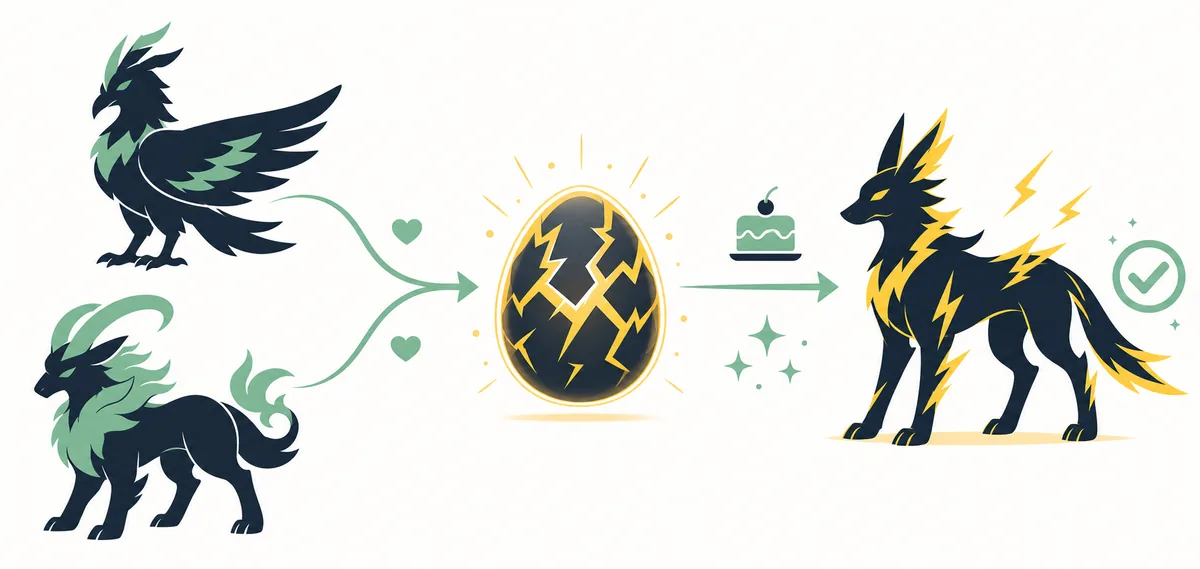
Every breeding cycle consumes one cake, so an unverified route wastes more than time. Prepare enough cake for a small test, assign one male and one female to the same Breeding Farm and confirm that the farm status shows progress. Move the resulting egg to an available incubator and record the pair used.
Evaluate the first hatches for three separate outcomes: correct species, usable gender and useful inheritance. Only the first outcome is deterministic for an exact current pair. Gender and passive results require repeated eggs, so your production plan should include spare box space and a simple keeper rule.
Scale the slowest queue after the route works. If farms wait for cake, improve ingredients or cooking. If eggs wait outside full incubators, add or reorganize incubation. If many Rayhounds hatch but none improve the line, parent quality rather than farm speed is the bottleneck. The Breeding Farm guide covers the complete cake loop.
| Checkpoint | What to verify | Do not scale until |
|---|---|---|
| Parent assignment | One male and one female in the same farm | Both remain assigned and reachable |
| Cake | Cake is in the farm storage | A complete cycle starts normally |
| Species | The first hatch is Rayhound | The installed build matches the route |
| Inheritance | Desired traits appear without excessive noise | A keeper can replace a weaker parent |
Avoid variant mistakes and outdated combo lists
Palworld 1.0 and the v26 data add many normal and variant records, which makes exact naming more important. Rayhound and Rayhound Cryst are separate targets. A parent such as Turtacle Terra is not interchangeable with Turtacle, and Vanwyrm Cryst is not the same record as Vanwyrm.
Old videos and charts may still rank for the right words while showing a previous child table. Treat a publication date as context, not proof. Compare the pair against the live calculator, keep the displayed data version in your notes and run one egg before baking a large cake batch.
If your game result disagrees with this page, stop the batch. Confirm spelling, suffixes, game build and whether a special rule applies. Report the exact two parents and observed child through the site contact route; a reproducible mismatch is more useful than a screenshot of an unlabeled egg.
| Risk | Example | Safe check |
|---|---|---|
| Missing suffix | Turtacle vs Turtacle Terra | Select the full datalist name |
| Wrong target | Rayhound vs Rayhound Cryst | Confirm the intended Paldeck entry |
| Old source | Pre-1.0 chart or video | Recheck in the v26 tool |
| Noisy parents | Several unrelated passives | Run a small inheritance batch first |
A practical Rayhound breeding plan
Begin with the complete search, choose two repeatable candidates and write down the exact parent names. Compare the passive pool and preserve backups before moving anything into the farm. Select the cleaner route, prepare a small cake supply and label the first eggs with their parent pair.
After the first hatches, keep only children that improve a stated goal: cleaner passives, needed gender or stronger IVs. Replace one parent at a time so you can see whether the line improves. Do not condense previous parents until the replacement has produced the expected Rayhound and a backup exists.
Finish by saving the pair, data version and keeper rule together. That record turns a one-time success into a repeatable route and makes future update checks straightforward. When v26 is replaced, rerun the same target search before resuming the project rather than assuming every old pair remained valid.
This guide was checked against the site’s v26 exact pair table on July 29, 2026. Major Palworld updates can change the available records or child table.